
Elaine Penhaul, our founder, is a mathematician by background. One of the questions she is most often asked is ‘how did you come to be running such a creative business?’. Elaine’s answer has consistently been, ‘beauty and creating beauty is always based on strong mathematical principles. It is something I can teach and something our staff, and clients, can learn for themselves.’
The Greek philosopher Proclus famously said, ‘Wherever there is number there is beauty’. So how does it work and what exactly does Maths have to do with staging luxury homes?
Beauty is never superficial and premium homes are a perfect example of why this is true. The homes that command attention, and sustain value, do so because they feel right. They offer calm without blandness, elegance without excess, and distinction without ostentation. While this may appear obvious, creating this feeling in a home is anything but accidental.
Here at Lemon and Lime, we often describe good design as quiet confidence. Behind that confidence lies a set of enduring principles that have shaped architecture and interiors for centuries. Long before trends, social media or “statement pieces”, beauty was governed by structure. It is governed by proportion, balance, symmetry and colour relationships rooted in mathematics.
Understanding these principles is key not only for homeowners investing in their properties, but also for estate agents tasked with presenting homes at their very best. When mathematics underpins design, beauty becomes timeless and timelessness protects value.
Symmetry: A Signal of Quality and Permanence
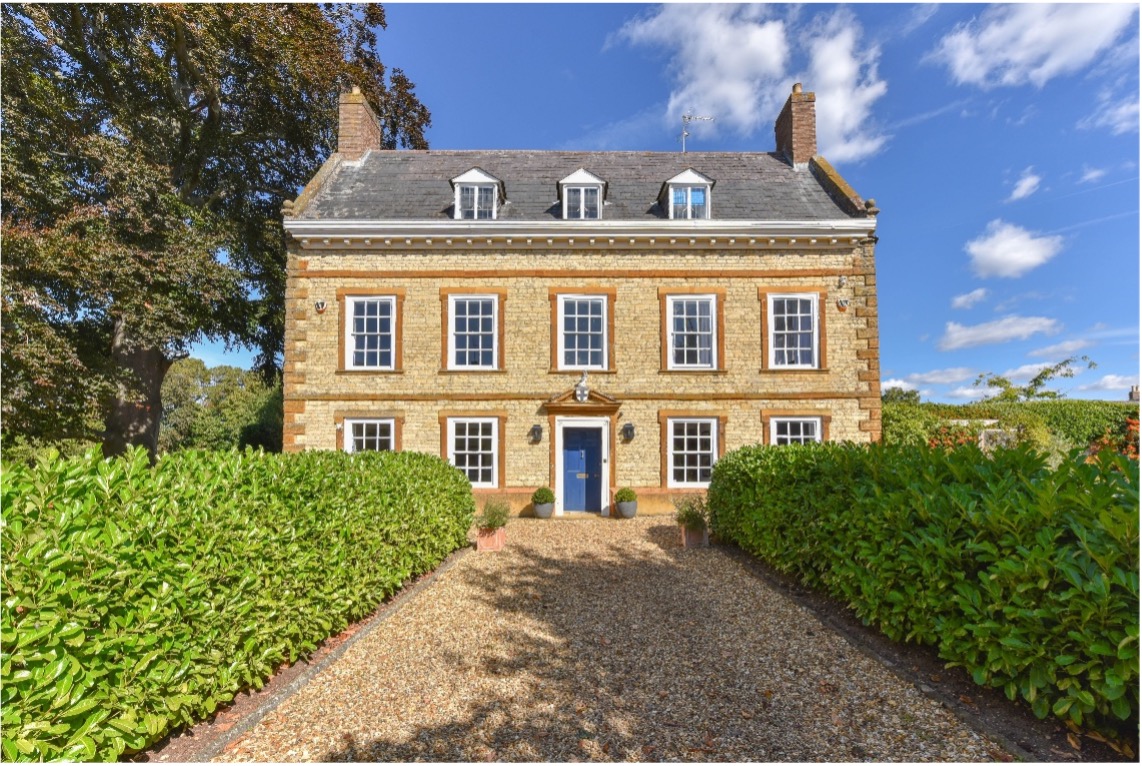
Symmetry is one of the most immediate cues of order and refinement. Humans instinctively associate symmetry with stability, craftsmanship and intention, qualities that discerning buyers look for, even if that happens on a subconscious level.
Historically, symmetry has defined our most prestigious architecture. Georgian townhouses, classical villas and grand country estates rely on carefully balanced façades to convey authority and elegance. The same principles apply internally. You only have to consider the enduing love affair we Brits have with Georgian architecture to see how true this is.
In interiors, symmetry is quietly reassuring. A balanced bedroom arrangement, a fireplace flanked by matching joinery, or a formal entrance hall with proportions mirrored on either side of a central staircase all signal that a home has been thoughtfully designed.
For estate agents and property photographers, symmetry photographs beautifully. It creates clarity in marketing images and allows potential buyers to immediately understand the hierarchy and flow of a space. For homeowners, it provides visual calm and an environment that feels composed and considered.
Having said that, symmetry need not be rigid. In contemporary or relaxed interiors, it often exists quietly beneath the surface, anchoring more expressive elements. The key is knowing when and where it is most important.
Balance: Visual Wealth Without Excess
Balance is where high-end interiors truly distinguish themselves. While symmetry mirrors, balance weighs. It is the difference between a space that feels generous and one that feels overcrowded, it creates the space between luxury and excess.
Every element in a room carries a visual weight. Size, colour and texture all play a role. A large sofa, a dark timber floor, a sculptural chandelier or a heavily veined marble surface must be balanced elsewhere to maintain a visual equilibrium.
In staging premium homes, imbalance often occurs when scale is misjudged. If a stager uses furniture that is too small for the architecture, or conversely but more rarely, statement pieces that overwhelm a space. Balanced interiors, by contrast, feel effortless. Nothing shouts, yet everything is noticed.
Balance in colour is especially important. Tone and depth of colour make a room feel cohesive through the wall colour, the furniture and even the cushions. Badly balanced colour, even if the colours themselves ‘work’ will feel uncomfortable.
For homeowners, balance will enhance the feeling of liveability. Rooms ‘feel right’ from the moment you enter. For estate agents, balanced spaces allow buyers to project themselves into the property without distraction, such a crucial factor in securing emotional engagement.
Proportion: The Hallmark of Timeless Value
Proportion is one of the most critical, and least obviously visible, principles in interior design. It governs how elements relate to one another, and it is often what separates enduring design from fashionable styling.
One of the most enduring proportional systems is the Golden Ratio, a mathematical relationship found throughout nature, classical architecture and fine art. While designers rarely apply it rigidly, its influence is unmistakable. Spaces, furniture and accessories that observe harmonious ratios simply feel right.
In practice, proportion affects everything: the height of ceilings relative to room width, the scale of artwork on a wall, the depth of seating in relation to circulation space and the size of rugs anchoring furniture groupings. Accessories arranged on a shelf or a dressing table will be noticed in a good way if they are in proportion with one another. An observer will sometimes notice that something isn’t right but not be able to articulate exactly why not when proportions are wrong.
High-value homes succeed when proportion is respected. Oversized furniture can diminish architectural elegance; undersized pieces make even generous rooms feel awkward. Well-proportioned interiors, however, transcend trends. They photograph well, age well and remain adaptable to future owners.
For estate agents, proportion is one of the strongest indicators of a property that will retain desirability across market cycles. Working with a stager who understands proportion and scale will significantly enhance the speed at which houses attract a buyer.
Rhythm and Flow: Guiding the Eye and the Buyer
Luxury homes are rarely experienced in a single glance. They unfold. Mathematics helps guide that journey.
Repetition and rhythm throughout the rooms create visual continuity. This might be achieved through repeated materials, consistent joinery details, aligned lighting or a restrained colour palette that flows from room to room. As stagers we will assign a colour palette to a house based on an existing piece of furniture, artwork or wall colour and repeat tones of the colour throughout so that rooms have a flow, or a rhythm.
This rhythm is subtle but powerful. It prevents visual fatigue and creates a sense of coherence across large properties, where disconnected spaces can otherwise feel quite fragmented.
For prospective buyers, rhythm supports emotional engagement. The home feels cohesive, intentional and calm, qualities that are always valued in high-end residential markets.
The Mathematics of Colour: Strategic, Not Subjective
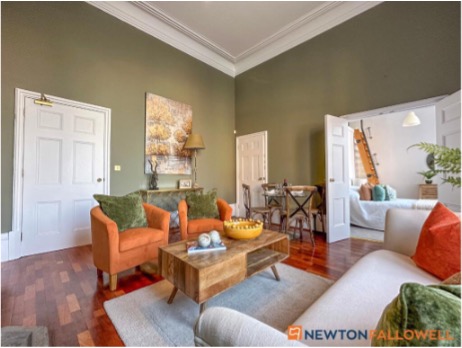
Colour is often described as personal, but in successful interiors it is also highly strategic. At a fundamental level, colour relationships are mathematical, defined by ratios and positions on the colour wheel.
Complementary colours energise. Analogous colours soothe. Monochromatic schemes rely on tonal variation rather than contrast. Each approach communicates something different and must be chosen in line with the property’s architecture, light levels and intended market.
In premium interiors, restraint is often the mark of confidence. Colour is used proportionally, with a dominant base, supporting tones and carefully judged accents. This allows a home to feel distinctive without alienating potential buyers.
Estate agents benefit enormously from well-considered colour strategies. Neutral does not mean bland when undertones are correct, contrasts are balanced and materials carry depth. Correctly applied colour enhances perceived space, light and quality all of which are critical in valuation and marketing.
Design as an Asset, Not an Overlay
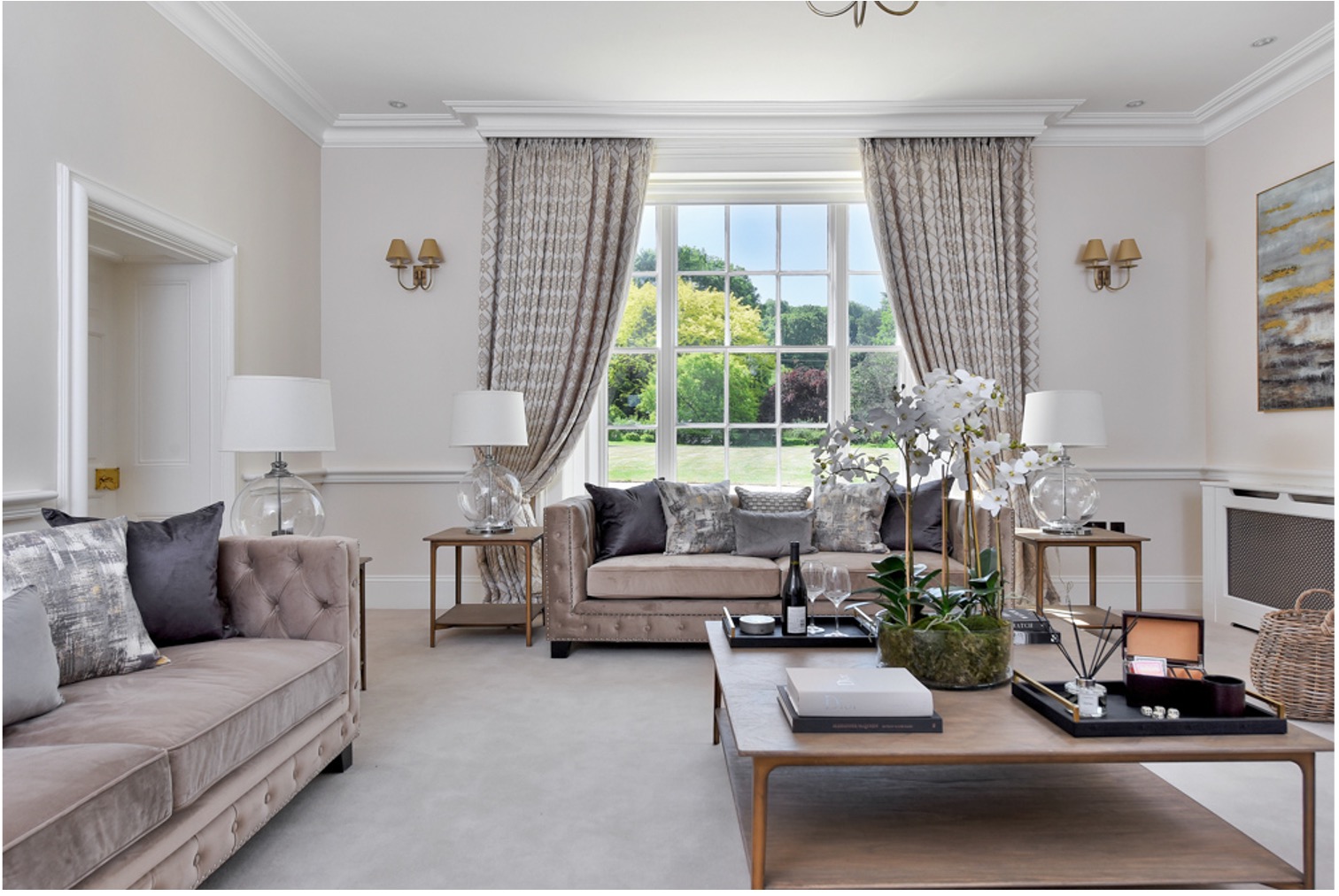
The most successful high-end homes are not decorated; they are designed. Their beauty is not dependent on trend-driven finishes or seasonal styling. Instead, it is embedded in structure, in mathematics that quietly governs how spaces feel and function.
For homeowners looking to achieve a successful sale maximising their asset, understanding this approach protects investment. For estate agents, it creates properties that stand out for the right reasons. They are calm and have a clear flow which creates confidence in a buyer.
At Lemon and Lime, we believe that true beauty is mathematical. It is measured, intentional and enduring. When mathematical principles underpin design decisions, homes gain something invaluable, a sense of rightness that resonates as soon as a potential buyer walks through the door and it creates a lasting memory which triggers desirability and, in turn, high offers. In a competitive prime property market, that quiet rightness is often what makes all the difference.
If you are a homeowner or estate agent struggling to create a cohesive, balanced, well-proportioned interior that attracts buyers quickly then do get in touch. We can help! 01332 987740 [email protected] or WhatsApp Elaine on 07967636718


